
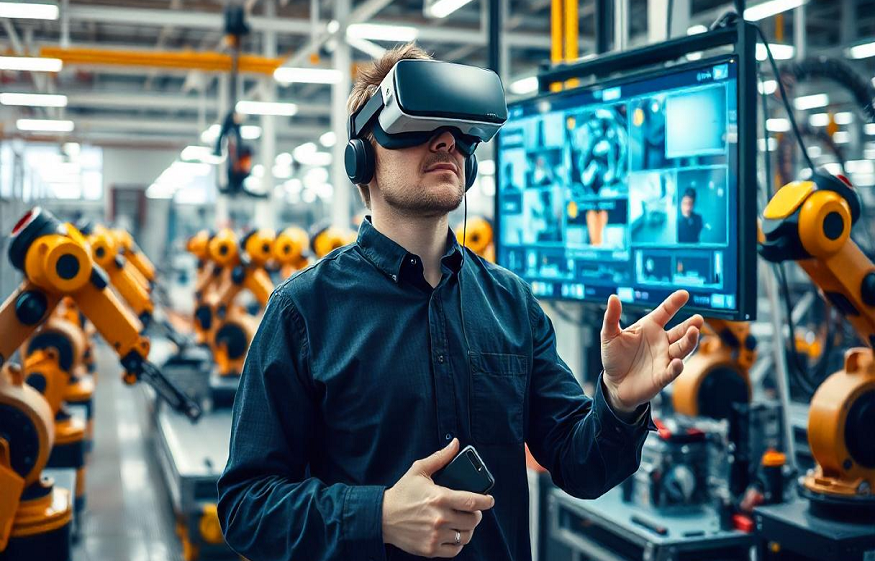
Modern policing is evolving rapidly, requiring officers to respond effectively to complex and high-pressure situations, especially as incidents of gun violence increase. Continuous training is essential to help officers make sound decisions in unpredictable environments. Traditional training methods, however, have often been expensive, limited in scope, and lacked sufficient emphasis on de-escalation and bias awareness. Virtual reality or VR is transforming police training by creating realistic, immersive simulations that replicate real-world scenarios.
Immersive VR training systems help create safe, interactive environments that enable officers to strengthen communication, decision-making, and conflict-resolution skills while gaining practical experience without exposing themselves or the public to actual risk.
Ways immersive VR training systems are used by the law enforcement
The rapid advancement of technology has significantly transformed modern policing, not only by changing how officers carry out their daily responsibilities but also by reshaping the way they are trained. Traditional police training methods, while still valuable, often rely on classroom instruction, role-playing exercises, and live simulations that can be expensive, time-consuming, and difficult to repeat consistently. Virtual reality (VR) has emerged as an innovative training solution that allows law enforcement agencies to create realistic, interactive, and immersive learning experiences. By placing officers in lifelike scenarios without exposing them to actual danger, immersive VR training systems enables them to strengthen technical, tactical, and interpersonal skills while improving confidence and decision-making under pressure.
Read More: Charles Spinelli Highlights Payroll Management Approaches for Expanding Workforce
One of the most valuable applications of VR in law enforcement is use-of-force training. Police officers are frequently required to make life-altering decisions within seconds when responding to potentially dangerous situations. Virtual reality recreates high-risk encounters involving armed suspects, active shooter incidents, hostage situations, or violent confrontations in a highly realistic digital environment. Officers must evaluate threats, determine the appropriate level of force, and decide whether de-escalation or tactical intervention is the safest response. Unlike conventional training exercises, VR scenarios can be repeated multiple times with different variables, allowing officers to experience the consequences of their decisions and refine their judgment without putting themselves or others at risk. This repeated exposure helps develop better decision-making skills while reinforcing legal and departmental standards regarding the use of force.
VR is equally effective for tactical and operational training. Law enforcement personnel often operate in unpredictable environments where situational awareness and coordinated teamwork are essential for ensuring public and officer safety. Through immersive simulations, officers can practice building searches, room-clearing techniques, vehicle stops, suspect pursuits, and coordinated responses to emergencies in a wide range of virtual settings. These environments may include residential neighborhoods, commercial buildings, schools, public transportation hubs, parking garages, or crowded urban streets. Because each scenario can be modified to include changing weather conditions, lighting, civilian presence, or unexpected threats, officers learn to adapt quickly to evolving circumstances. Such realistic practice enhances communication among team members, improves tactical movement, and builds confidence before officers encounter similar situations in the field.
Read More: Why Customized Coasters Are Becoming a Popular Branding Product
Another area where VR is making a significant contribution is crisis intervention training, particularly when responding to individuals experiencing mental health crises, emotional distress, or behavioral disorders. Virtual reality enables officers to engage with digital characters displaying realistic emotional and behavioral responses, allowing them to practice active listening, verbal de-escalation, and crisis communication techniques.